







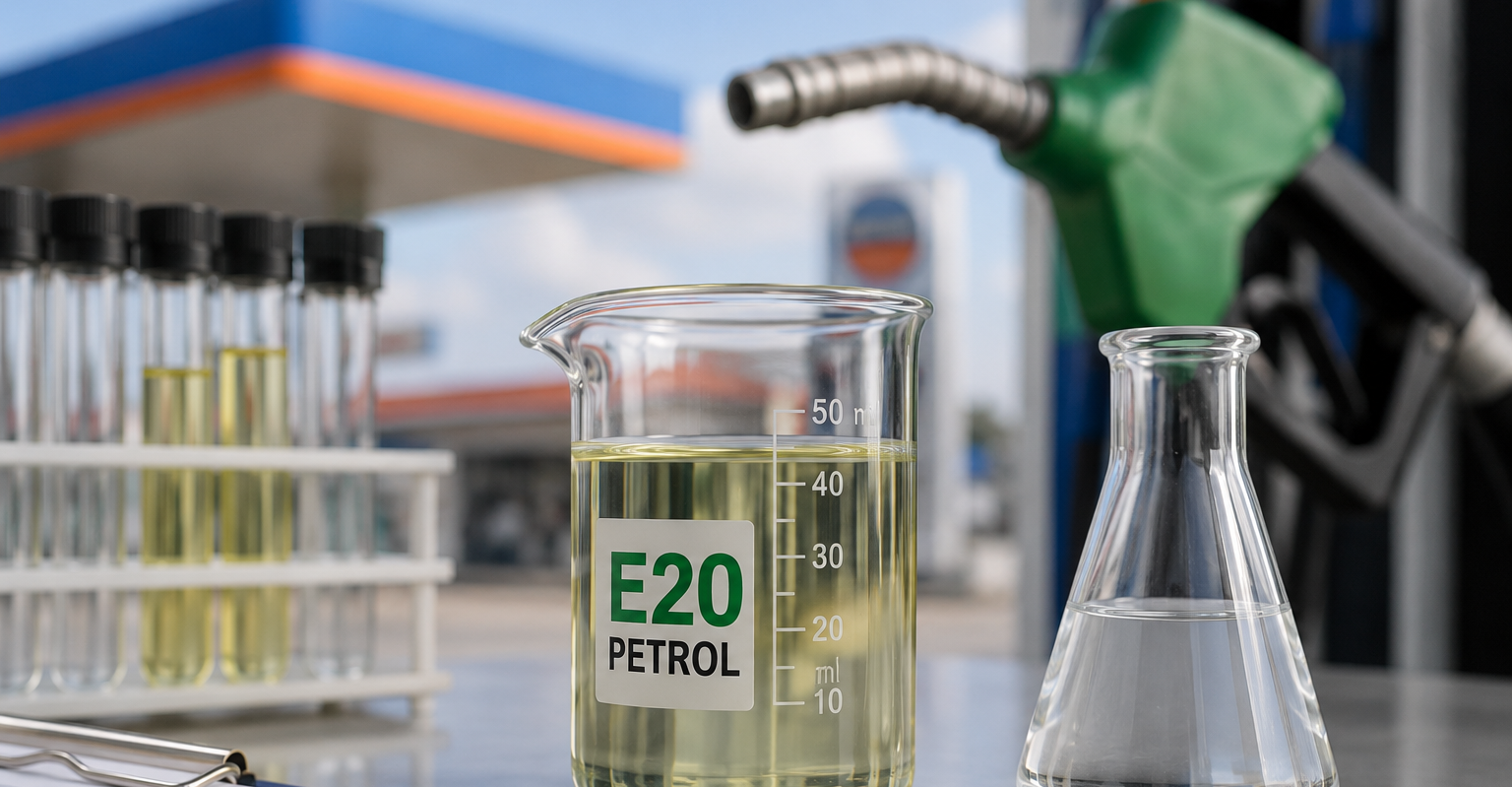
Oil Marketing Companies (OMCs) have said nationwide intensive testing of E20 petrol found no evidence to substantiate recent claims of excessive chloride or moisture contamination in the fuel, and that samples tested across the supply chain remained within prescribed quality limits.
The testing was undertaken following recent media reports alleging the presence of moisture and chloride in ethanol-blended motor spirit (EBMS), or E20 petrol. OMCs said the additional surveillance covered the entire supply chain, from refineries and distilleries to depots, tank trucks and retail outlets.
“Based on extensive random testing through scientifically designed tests, the evidence shows that there is no cause for any alarm on account of fuel contamination,” the OMCs said.
The companies said fuel quality remains a top priority and that any issue that could potentially affect vehicle performance or consumer confidence is addressed through scientific investigation and corrective action.
The government has prescribed stringent chloride specifications for ethanol used in petrol blending and established monitoring mechanisms across the supply chain. Chloride levels are being checked at multiple stages, including refineries, distilleries, depots, terminals and retail outlets.
As part of the intensified surveillance, OMCs have also increased water-ingress and density checks at retail outlets, with tests being conducted 8-12 times a day. Mobile fuel-quality testing laboratories have been deployed at various locations, while samples are being independently validated by fuel laboratories.
Refinery petrol
More than 100 randomly selected petrol samples from various refineries were tested, with all samples recording chloride levels at or below 1 ppm, according to the OMCs.
Ethanol from distilleries
Ethanol supplied by distilleries, which is the principal blending component for E20 petrol, was also found to have chloride levels significantly below the prescribed limit.
A dedicated task force comprising representatives of OMCs and the Centre for High Technology (CHT) tested ethanol samples from 80 distilleries across the country over the past 10 days. All samples recorded chloride levels below 3 ppm.
E20 petrol at depots and terminals
More than 80 samples of ethanol and E20 petrol collected from OMC depots and terminals across the country also recorded chloride levels below 3 ppm, the companies said.
At retail outlets, more than 1,000 samples have been collected under the intensified monitoring programme. Of the 160 test reports analysed so far for chloride content, levels were found to be in the range of 0-3 ppm, contrary to claims of chloride concentrations running into several hundred parts per million.
The surveillance programme identified four isolated instances of elevated chloride levels. Supplies from these outlets were suspended immediately, followed by detailed root-cause analysis and corrective measures before supplies were restored.
Water-ingress checks
Around 90,000 retail outlets have begun mandatory inspections and monitoring of underground storage tanks. The tanks are being checked 8-12 times daily for possible water ingress. So far, the inspections have not detected any water ingress, according to the OMCs.
A tabulated summary of the test results is available on the official website of the Centre for High Technology and will be updated as additional results become available.
The OMCs said quality surveillance would continue across the fuel supply chain and that any deviation detected would be followed by prompt corrective action.
The companies also reassured consumers that E20 petrol supplied through their network conforms to prescribed quality specifications and said consumers can continue using the fuel with confidence.


