







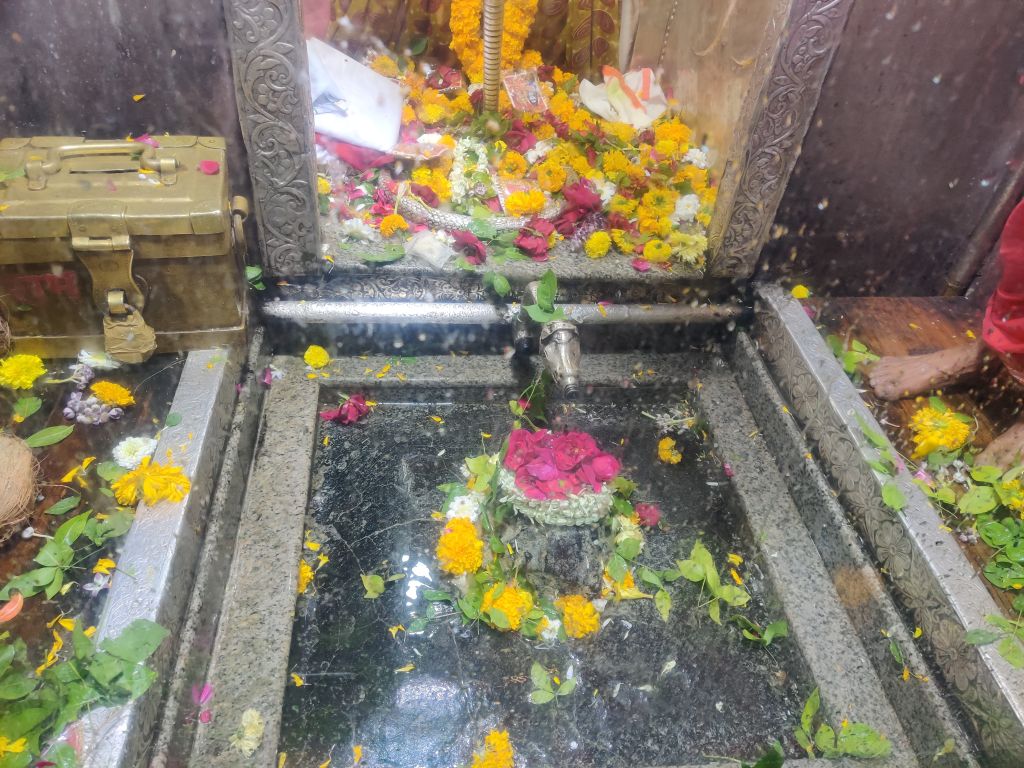
The spiritual significance of Omkareshwar is described in ancient Hindu scriptures such as the Skanda Purana, Shiva Purana, and Vayu Purana. Located on the northern bank of the Narmada River in Madhya Pradesh, about 77 kilometres from Indore, Omkareshwar is the only Jyotirlinga situated on the river’s northern bank.
According to sacred texts, Lord Shiva rests at Omkareshwar after completing his daily circumambulation of the three worlds. Reflecting this belief, the temple conducts special rituals for the deity’s nightly repose, including elaborate arrangements for Shayan Darshan (the ceremonial resting of the deity).
Sacred texts Associated with Omkareshwar
Several Hindu legends are associated with Omkareshwar, highlighting its immense religious significance.
One popular sacred text states that Vindhya, the presiding deity of the Vindhya mountain range, performed intense penance to atone for his sins. He established a sacred yantra and worshipped a Shiva Linga formed of sand and clay. Pleased by his devotion, Lord Shiva manifested in two forms—Omkareshwar and Amareshwar (Mamleshwar). It is believed that the place where the earthen Shiva Linga assumed a divine form later became known as Omkareshwar.
Another sacred tradition is linked to King Mandhata of the Ikshvaku dynasty, an ancestor of Lord Rama. According to tradition, King Mandhata performed severe penance at this site, after which Lord Shiva appeared before him in the form of a Jyotirlinga. Some traditions also state that Mandhata’s sons, Ambarisha and Muchukunda, undertook rigorous penance here. As a result, the hill and island are also known as Mandhata Parvat or Mandhata Island.
Yet another sacred text recounts that during a fierce battle between the gods and demons, when the demons gained the upper hand, the distressed gods prayed to Lord Shiva. Responding to their prayers, Shiva manifested as the Omkareshwar Jyotirlinga, destroyed the demons, and restored victory to the gods. This story has made Omkareshwar a symbol of divine protection in the triumph of righteousness over evil.
Omkareshwar is also closely associated with Adi Shankaracharya. According to religious tradition, he met his guru, Govinda Bhagavatpada, in a cave near the temple and studied Vedanta under his guidance. The cave still exists near the temple and remains an important pilgrimage site. A statue of Adi Shankaracharya has also been installed there, commemorating his life and his contribution to the Advaita Vedanta tradition.
The Omkareshwar Temple
The Omkareshwar Temple is situated at Mandhata, on the island in the Narmada River, that is believed to resemble the sacred symbol ‘Om’. The Mamleshwar Temple (formerly known as Amareshwar) stands on the southern bank of the river. Both temples hold equal religious significance, and the Shiva Lingas in both shrines are regarded as Jyotirlingas. The temple complex also houses shrines dedicated to Goddess Parvati and Lord Ganesha.
Historical traditions suggest that the original temple was built in the 11th century CE by the Paramara rulers of Malwa. After the Paramaras, the temple came under the patronage of the Chauhan rulers. During the medieval period, it suffered damage during Muslim invasions and was subjected to repeated attempts at plunder and destruction. Despite these attacks, the temple’s core structure survived.
In the 18th century, the temple was restored under the patronage of the Holkar dynasty. The reconstruction was initiated by Gautama Bai Holkar, the first queen of the Holkar state, and later completed by Ahilyabai Holkar, who played a significant role in restoring many ancient temples across India.
During British rule, the temple came under colonial administration. After India’s Independence in 1947, its preservation and maintenance were entrusted to the Archaeological Survey of India (ASI) in coordination with the local administration. Today, Omkareshwar is protected as both a historical monument and a sacred religious site.
Two traditional circumambulation routes are observed on Mandhata Island—a short parikrama and a long parikrama. The complete pilgrimage to Omkareshwar is traditionally considered a three-day journey, during which devotees visit all the important sacred sites in the area.
Rituals and Religious Ceremonies
The Omkareshwar Jyotirlinga hosts several daily rituals, including, Partheshwar Puja, Panchamrit Puja, Narmada Puja, and the Narmada Aarti.
Every Monday evening, a grand procession of Lord Omkareshwar begins from the temple complex. The procession passes through the Shankaracharya Temple and proceeds to Kotitirth Ghat. After the rituals, the deity is ceremonially taken on a boat ride across the Narmada River before returning to the temple. Devotees dressed in traditional attire participate enthusiastically, creating a vibrant and devotional atmosphere.
Every evening, the sacred Narmada Aarti is performed at Kotitirth Ghat. On Maha Shivaratri, the temple hosts special celebrations, including the Shayan Aarti and Mangala Aarti, attracting thousands of devotees from across the country.


