







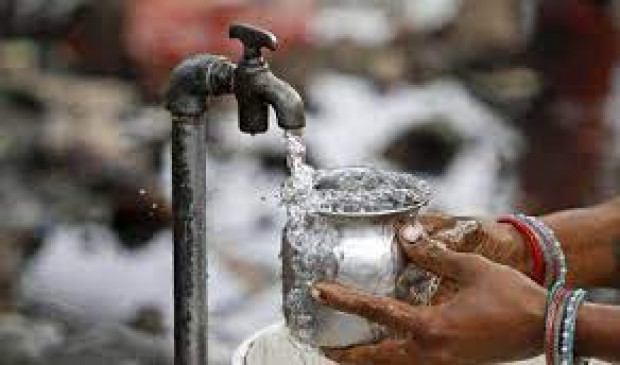
More than 82% of rural households across India now have access to tap water under the Jal Jeevan Mission (JJM), while the Centre has strengthened measures to ensure the quality and safety of drinking water supplied through the programme.
According to information shared by Union Jal Shakti Minister C. R. Patil in a written reply in the Lok Sabha on Thursday, around 15.89 crore rural households (82.09%) out of a total 19.36 crore rural households had been provided functional tap water connections as of July 18, 2026. When the mission was launched in August 2019, only 3.24 crore households (16.72%) had access to tap water.
The Jal Jeevan Mission – Har Ghar Jal aims to provide every rural household with potable tap water in adequate quantity, of prescribed quality and on a regular, long-term basis. The government said all piped water supply schemes under the mission follow the Bureau of Indian Standards (BIS:10500) norms for drinking water quality.
To address water quality concerns, priority is being given to villages affected by chemical contamination while planning new water supply schemes. States and Union Territories have been advised to develop piped water supply projects based on safe alternative water sources or bulk water transfer wherever existing sources are contaminated.
The Centre said every water supply scheme under the mission is approved only after the respective State Government’s Source Finding Committee certifies that the identified water source has sufficient yield to sustain water supply as per prescribed norms.
Since drinking water is a State subject, the responsibility for planning, designing, implementing, operating and maintaining drinking water supply schemes rests with State and Union Territory governments. The Centre supports these efforts by providing financial assistance, policy guidance and technical support.
To strengthen water quality monitoring, the government released the “Concise Handbook for Monitoring Water Quality of Piped Drinking Water Supply to Rural Households” in December 2024. The handbook recommends comprehensive testing of drinking water samples at the source, treatment plant, storage facilities and distribution network.
The guidelines prescribe time-bound remedial measures. In cases of chemical contamination, authorities have been advised to immediately stop using the affected source, inform local communities and provide safe drinking water of at least 8–10 litres per capita per day through alternative arrangements within 24 hours until piped supply is restored. Emergency treatment, cleaning overhead tanks and repairing pipeline leakages should be completed within seven days before supply resumes after fresh quality testing.
For bacterial contamination, the handbook recommends immediate disinfection, public notification and temporary supply of safe drinking water through tankers while corrective measures are carried out.
State and Union Territory-wise data released by the government show that during 2026–27 (up to the reporting date), 23.29 lakh water samples were tested in laboratories and 34.93 lakh samples were tested using Field Testing Kits (FTKs). In 2025–26, States and UTs carried out 71.31 lakh laboratory tests and 49.87 lakh FTK tests.


