







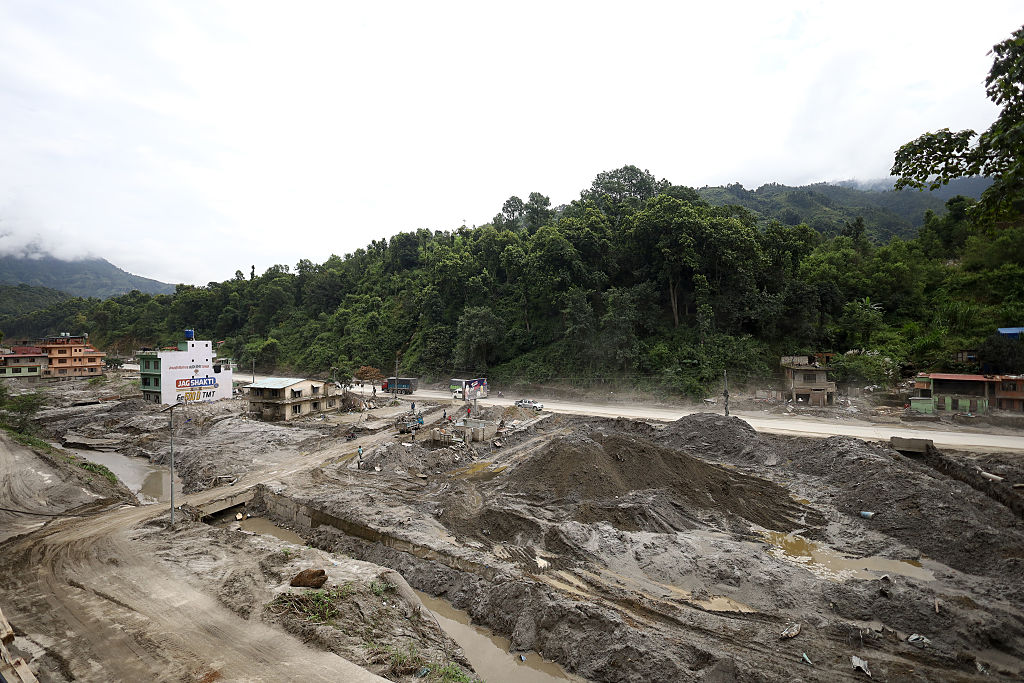
Nepal has activated its disaster response mechanisms after weather forecasters warned of heavy rainfall across several parts of the country from September 24 to 27.
A low-pressure system developing over the Bay of Bengal is expected to bring heavy rainfall, with authorities urging people to remain vigilant and follow updates issued through official government channels.
Ananda Kafle, Joint Secretary at Nepal’s Ministry of Home Affairs, appealed to citizens to avoid unverified information and rely on updates from the Nepal Meteorological Department, the National Disaster Risk Reduction and Management Authority and other government agencies.
The ministry has also advised people to avoid non-essential travel and stay away from areas vulnerable to flooding, landslides and inundation during the forecast period.
The weather service has forecast heavy to very heavy rainfall at some places in Gandaki and Lumbini provinces, while several areas of Koshi, Bagmati, Madhes, Karnali and Sudurpaschim provinces are also likely to receive heavy rain.
Authorities have called for special caution around Pokhara in Gandaki Province; the Terai and hilly areas of Lumbini; hilly areas of Bagmati; mountainous areas including Taplejung in Koshi; Jumla and adjoining areas in Karnali; and the hilly belt of Sudurpaschim.
Officials said the government had already activated its preparedness mechanisms and circulated the monsoon pre-preparation and response plan to district administrations.
The Department of Tourism has separately advised mountaineers, trekkers and support staff to exercise caution as heavy rainfall, thunderstorms, lightning and strong winds are forecast from September 25 to 27.
The adverse weather could trigger soil erosion, floods and landslides, while snowfall is also expected in the Himalayan region. People already in mountainous areas have been advised to monitor weather forecasts, avoid unnecessary travel and move to safer locations if required.
The department has also asked health institutions in major trekking and mountaineering areas, including Sama Gaun in Gorkha, the Khumbu region and Manang, to ensure uninterrupted medical services. Healthcare providers in Kathmandu and Pokhara have also been asked to maintain smooth services for Himalayan-related emergencies.
Meanwhile, Nepal’s National Disaster Risk Reduction and Management Authority has issued a nationwide high alert following the weather warnings.
Authority spokesperson Shanti Mahat warned of risks including soil erosion, floods, landslides, debris flows and urban inundation, particularly in the Terai region. Rising water levels in rivers and rivulets are also expected.
The authority said the weather system could disrupt daily life, agriculture, health services, tourism and construction activities near river corridors, besides affecting road transport and domestic and international flight operations.
Travellers, trekking operators and local stakeholders have been advised to monitor real-time weather updates, avoid high-risk river basins and hazard zones, and follow safety instructions issued by security agencies and local authorities. Dedicated helplines have also been activated to support emergency response. (ANI)


