







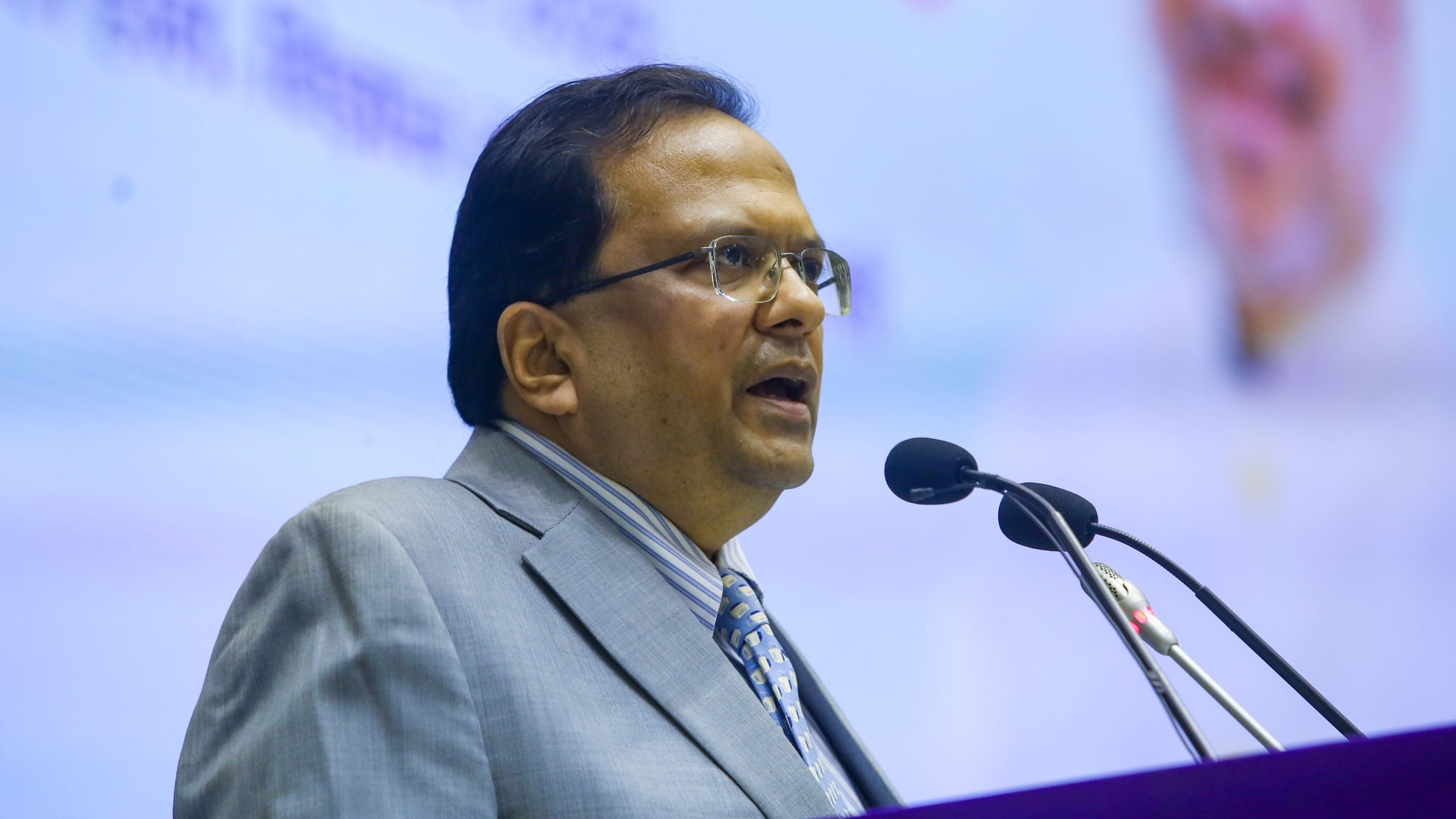
Union Home Secretary Govind Mohan on Thursday reviewed the preparedness of Himalayan states and the Union Territory of Jammu and Kashmir to deal with the risks of Glacial Lake Outburst Floods (GLOFs) and snow avalanches.
The meeting, held in New Delhi, was attended by the chief secretaries and State Disaster Management Authorities of Uttarakhand, Himachal Pradesh, Sikkim and Arunachal Pradesh, as well as Jammu and Kashmir, besides senior officials from the Ministry of Home Affairs (MHA), National Disaster Management Authority (NDMA), Central Water Commission (CWC), India Meteorological Department (IMD) and Defence Geoinformatics Research Establishment (DGRE).
The meeting reviewed the evolving risk of GLOFs in the Himalayan region, with a focus on early warning systems, monitoring of vulnerable glacial lakes and snow-covered areas, identification of high-risk locations and flow paths, timely dissemination of alerts, evacuation preparedness and strengthening response mechanisms.
The states presented their preparedness and mitigation measures, including monitoring of vulnerable glacial lakes, strengthening early warning systems, improving last-mile dissemination of alerts, flow-path planning, community preparedness and deployment of response resources in vulnerable areas.
State specific vulnerabilities and preparedness measures were also discussed, with emphasis on translating mitigation plans into concrete action at the district and local levels.
Mohan stressed the need for continuous and proactive monitoring of vulnerable glacial lakes and avalanche-prone areas, particularly during periods of heightened risk. He called for close coordination among state agencies, district administrations and scientific and technical institutions to ensure that warnings are acted upon promptly and effectively.
He said preparedness for GLOFs and snow avalanches should move beyond response-oriented measures towards risk-informed planning, preventive mitigation and community-level preparedness.
The states and Union Territory were advised to regularly review their preparedness plans, identify gaps in early warning and evacuation arrangements, and take corrective measures well in advance of extreme weather events.
Mohan also called for expediting the implementation of GLOF mitigation projects sanctioned by the Centre for the states in 2024.
The meeting concluded with directions for continued inter-agency coordination, regular sharing of risk information and further strengthening of early warning and response mechanisms to minimise loss of life and property in vulnerable Himalayan areas.


