







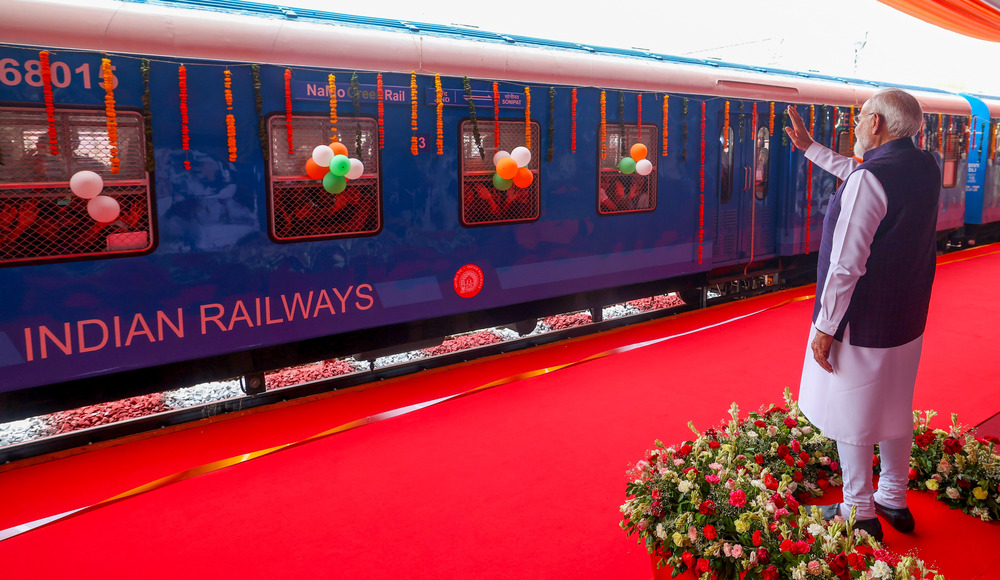
India’s first hydrogen fuel cell-powered passenger train has completed around 900 kilometres on the Jind-Sonipat route within the first five days of commercial operations, marking a significant milestone in the country’s efforts to adopt clean rail transportation.
The train was inaugurated by Prime Minister Narendra Modi on July 17 and is India’s first passenger service powered by hydrogen fuel cell technology. According to officials, its successful operation places India among a select group of countries using hydrogen-powered rail technology.
The 10-coach train replaces conventional diesel engines with two 1,200-kilowatt hydrogen-electric propulsion systems, reducing dependence on diesel and conventional electricity.
The train’s fuel cells generate electricity by combining hydrogen and oxygen, with water vapour and heat being the only direct by-products of the process. The zero-emission technology is expected to provide a cleaner and more sustainable mode of transport for passengers.
Railway authorities said ticket fares have been kept unchanged and remain on par with ordinary Diesel Multiple Unit (DMU) services, ranging between Rs 10 and Rs 25, ensuring that the adoption of green technology does not increase travel costs for commuters.
The hydrogen-powered train is also expected to reduce dependence on fossil fuels and support the objectives of the National Green Hydrogen Mission. Its operations are backed by an indigenously developed hydrogen storage and refuelling facility at Jind, designed to support long-term commercial operations.
Officials said the successful rollout of the Jind-Sonipat service could serve as a model for the expansion of clean, sustainable and self-reliant rail transport infrastructure across the country.
(With ANI inputs)


